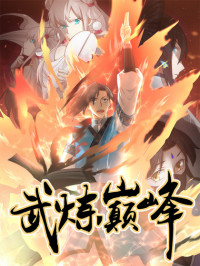
Martial Peak is one of the longest and most iconic Chinese cultivation manhua, known for its massive story world, deep realm system, and the unstoppable rise of its protagonist, Yang Kai. With thousands of chapters, extraordinary power-ups, ancient treasures, endless realms, and intense sect politics, Martial Peak has earned a legendary reputation among cultivation enthusiasts. This description provides a detailed overview of the manhua’s main themes, plot foundations, worldbuilding, characters, and what makes Martial Peak a must-read for fans of long-term progression and adventure.
The journey in Martial Peak begins at the High Heaven Pavilion, where the young disciple Yang Kai starts as one of the weakest members of the sect. Despite having no natural talent or special background, he possesses an unbreakable will and the spirit to endure the toughest trials. The core philosophy of Martial Peak is that reaching the peak of martial arts requires constant suffering, and Yang Kai embodies this perfectly. His growth is not gifted but earned through relentless training, life-threatening encounters, and painful breakthroughs.
As the story expands, Martial Peak introduces a massive and complex cultivation system that includes realms, body refinement, artifacts, bloodlines, pills, and secret techniques. What makes Martial Peak stand out is the consistency of its worldbuilding. Every realm transition opens a new section of the universe, leading Yang Kai from the Mortal World to the Star Boundary, then to the Demon Realm, the Outer Universe, and eventually to a cosmic battlefield where entire worlds are at stake. Each realm brings new enemies, new allies, and new mysteries tied to the lore of heaven and earth.
One of the core attractions of Martial Peak is its long-term character development. Yang Kai begins as a lone, struggling disciple but gradually becomes a powerful leader, artifact refiner, alchemist, cultivator, and eventually a force feared across multiple realms. Along the way, he meets memorable characters, including Su Yan, Xia Ning Chang, Shan Qingluo, and many others who play major roles in the story. These relationships form an emotional backbone to the manhua without overshadowing the action-driven narrative.
The action in Martial Peak is another major highlight. Battles are frequent, intense, and strategic. Yang Kai’s fighting style constantly evolves as he acquires new abilities such as space manipulation, dragon transformation, artifact mastery, and world force control. Each fight also pushes the plot forward, introducing new sect politics, world conflicts, or divine treasures. The manhua is known for its creative and unpredictable battle sequences that keep readers engaged even after hundreds of chapters.
In terms of storytelling, Martial Peak is structured around multiple long arcs. Each arc introduces new locations, realms, sects, and enemies. While some arcs focus on cultivation, others emphasize war, territory defense, political struggles, or treasure exploration. The variety in story arcs is one of the main reasons Martial Peak maintains reader interest over such a long chapter count. Whether Yang Kai is fighting demon kings, exploring ancient ruins, or leading armies in inter-realm wars, the narrative remains fresh and exciting.
The worldbuilding is one of the strongest elements of Martial Peak. The author expands the universe layer by layer, allowing readers to slowly uncover secrets about the heavens, divine laws, ancient bloodlines, and the cosmic war between light and darkness. Each realm feels unique, with its own culture, power structures, and history. From the Star Boundary’s Heavenly Dao to the Outer Universe’s World Beads and the perilous Black Ink Battlefield, every location contributes to the grand narrative.
Another reason Martial Peak resonates with readers is its underlying theme of perseverance. Yang Kai never relies solely on fate or luck. He cultivates, fights, bleeds, and earns every step toward strength. Even when facing enemies far beyond his realm, he uses intelligence, patience, and strategy to overcome obstacles. This growth-driven narrative is deeply satisfying for fans who enjoy seeing a protagonist evolve from weak to overwhelmingly powerful through effort and experience.
The manhua also explores the idea of destiny. While Yang Kai is chosen by ancient forces and inherits unique abilities, Martial Peak repeatedly emphasizes that destiny alone is not enough. Without willpower, bravery, and endurance, even the strongest inheritances would amount to nothing. Yang Kai’s journey reflects a balance between fate and personal determination, making the story emotionally engaging and thematically rich.
Overall, Martial Peak is more than just a cultivation story; it is an expansive universe filled with unique characters, breathtaking battles, emotional arcs, and a protagonist who embodies resilience. Its long length allows readers to immerse themselves in a world that feels endless, detailed, and constantly evolving. For anyone seeking a manhua with deep lore, explosive action, multidimensional realms, and nonstop progression, Martial Peak is one of the best examples of the genre.